Why Canadian winter driving needs a different car kit
Winter driving in Canada can mean cold starts, messy snow clearing, frozen windshields, lower tire pressure, shorter daylight, and longer waits if something goes wrong. The goal is not to turn your trunk into a survival bunker. It is to keep a small, practical set of items that help with the problems Canadian drivers actually face.
A city commuter may only need basic snow clearing, phone power, and a few roadside visibility items. A highway commuter, family vehicle, or older car parked outside may deserve a more complete kit. The useful version is the one you can actually keep in the car without turning the trunk into a storage unit.
Essential winter car accessories for Canadian drivers
1. Snow brush and ice scraper
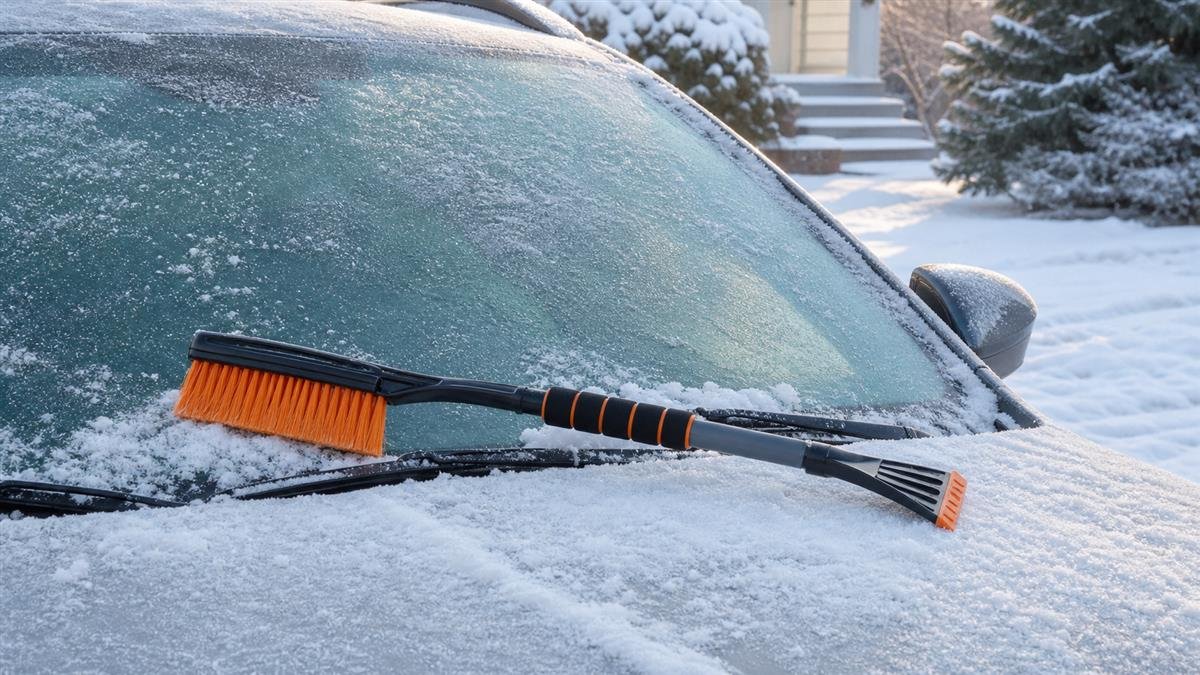
A snow brush and ice scraper is the item most Canadian drivers use again and again. It helps clear the windshield, roof snow, mirrors, headlights, and side glass before you leave.
What to check: Choose one that is long enough for your vehicle and easy to reach. If it is buried under luggage in the trunk, it becomes less useful on rushed mornings.
For sedans and compact cars, a medium-length brush is usually easier to store. For SUVs, minivans, and trucks, a longer handle can make roof snow less annoying, as long as the tool still fits somewhere practical.
2. Portable jump starter
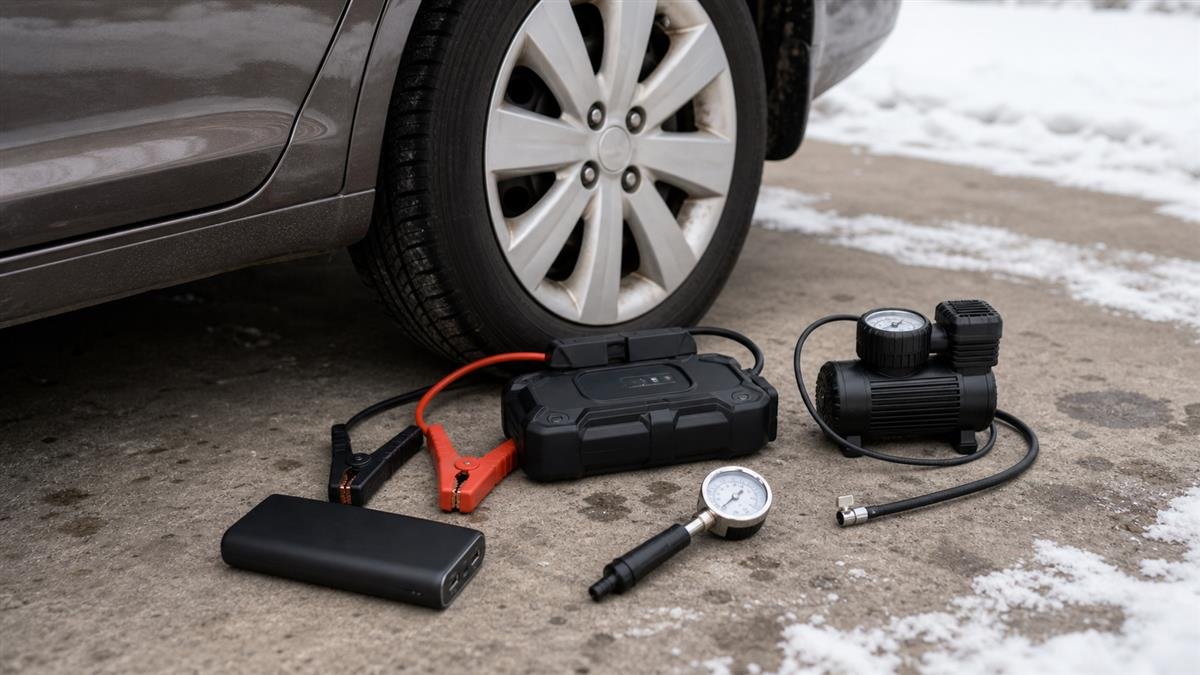
A portable jump starter can be useful when a battery struggles in cold weather, especially for vehicles parked outside. It should be charged before winter and checked periodically, not forgotten in the trunk for months.
Look at the supported engine size, cable length, built-in light, storage case, and how clearly the unit shows its remaining charge. A jump starter is most useful when you can understand it quickly on a cold morning.
See current portable jump starter options on Amazon.
3. Booster cables
Booster cables are a simple backup item if another vehicle is available. They are not as self-contained as a jump starter, but they are compact, inexpensive, and easy to keep with other roadside gear.
What to watch: Use them only according to your vehicle manual and product instructions.
They make more sense if you often drive with family, commute with other vehicles around, or want a low-tech backup. If you frequently park alone in quiet lots or rural areas, a charged jump starter may be more useful.
4. Portable tire inflator
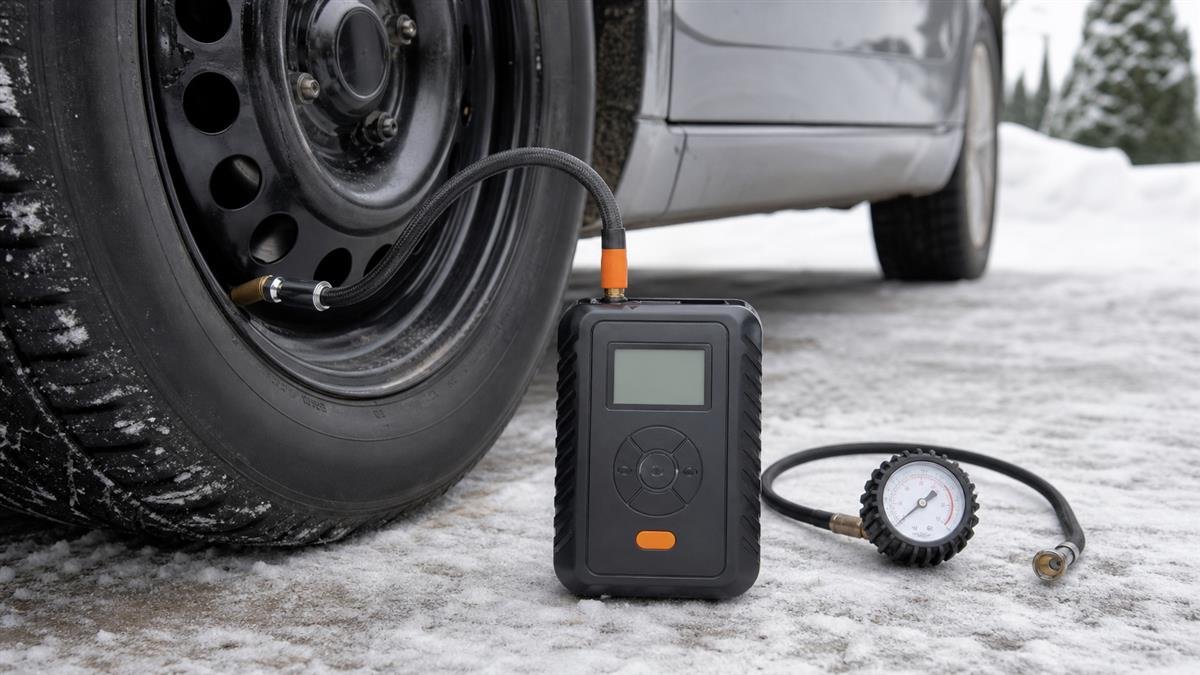
Cold weather can make low tire pressure more noticeable. A portable tire inflator can help with routine top-ups before a commute or road trip, but it does not replace tire repair.
Before buying, check whether it runs from a 12V outlet, built-in battery, or both. Cordless models are convenient, but they need charging; plug-in models are less flexible, but they avoid another battery to maintain.
See current portable tire inflator options on Amazon.
5. Tire pressure gauge
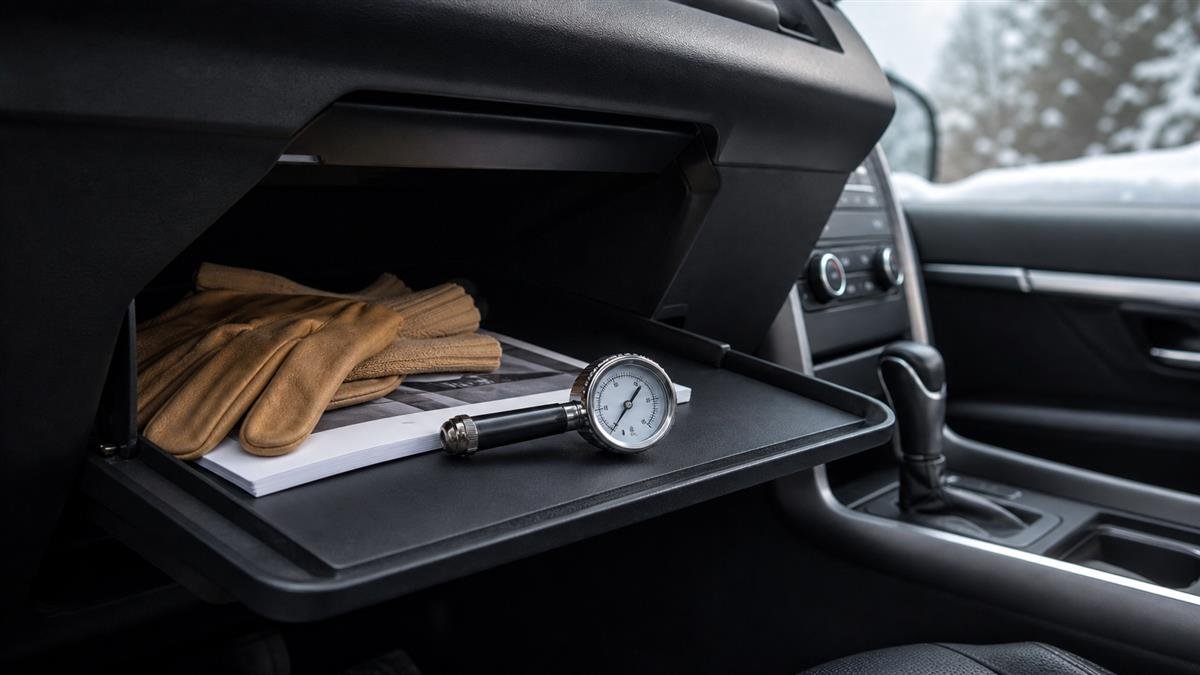
A tire pressure gauge is small, cheap, and useful after big temperature drops. Even if your vehicle has a tire-pressure warning system, a simple gauge can help you confirm what is actually happening before a longer drive.
Keep it somewhere reachable, not buried with seasonal cargo. A separate gauge is also useful when your inflator's built-in reading seems slow, vague, or hard to see in cold weather.
6. Compact shovel
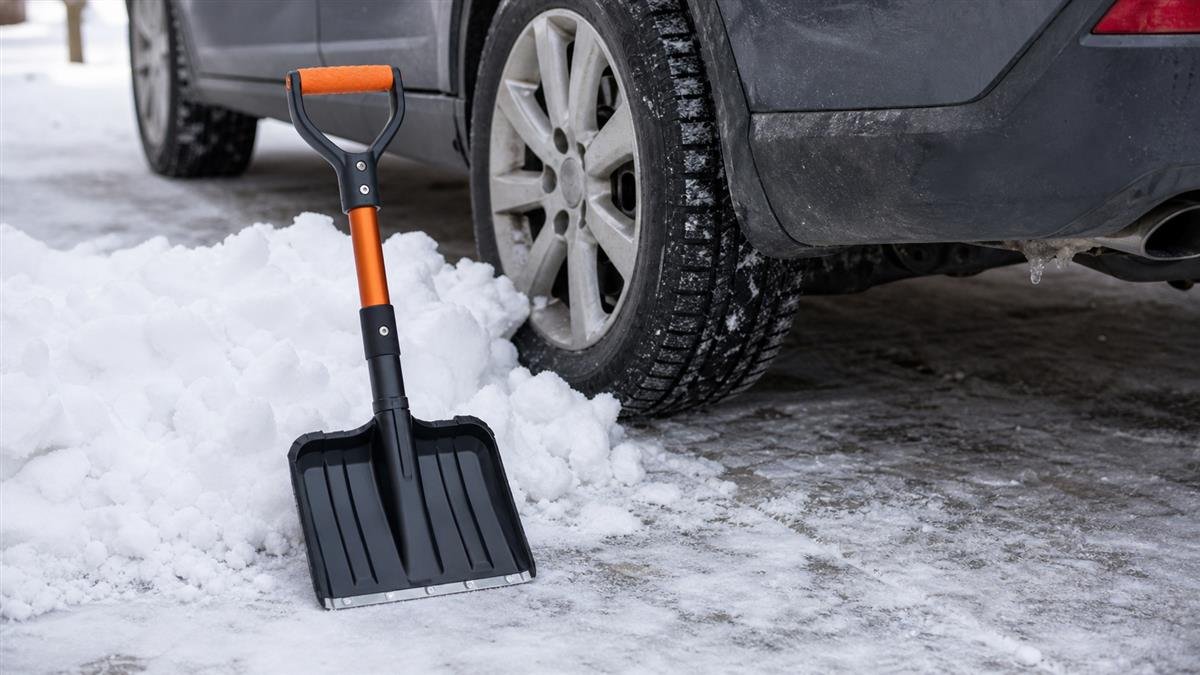
A compact shovel can help if snow builds around tires, behind the vehicle, or at the end of a parking spot. Keep it small enough that it actually stays in the car through winter.
A folding or telescoping shovel is usually enough for clearing around tires or a plowed-in parking spot. It should feel sturdy in gloves and should not take up so much room that you remove it after the first grocery run.
7. Traction mats or traction aid
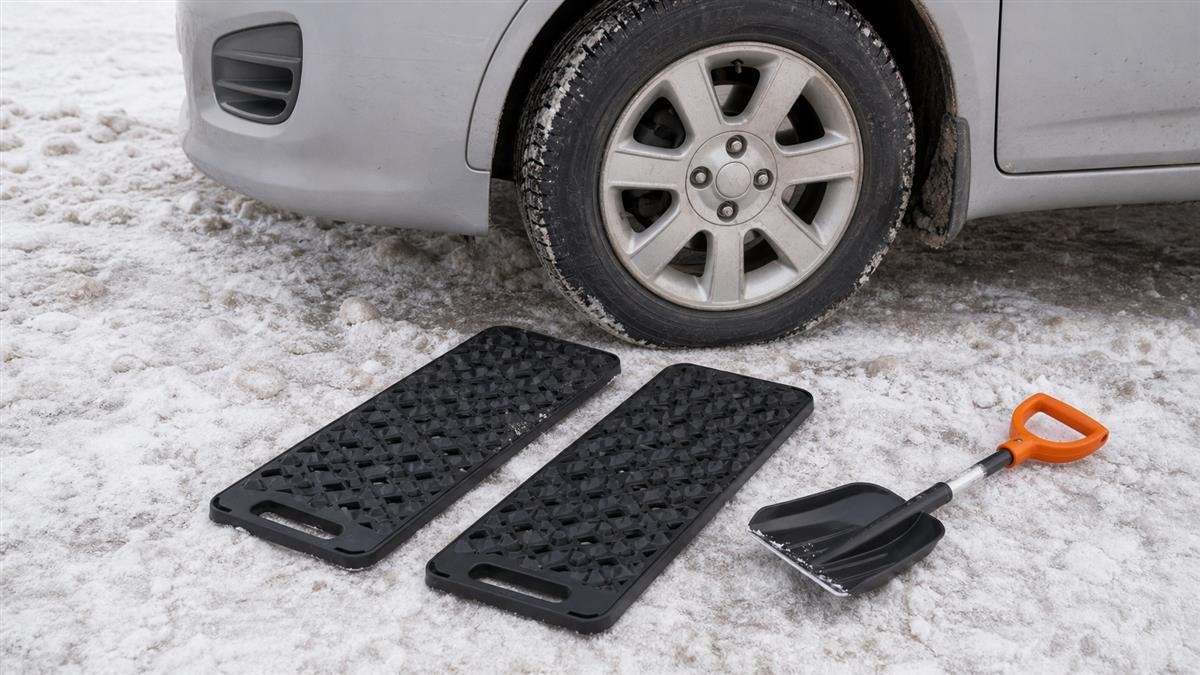
Traction mats can help in light snow, slush, or slippery parking spots when a tire needs a little grip to move. They are useful backup items, but they cannot get every vehicle out of every situation.
They are most sensible for apartment lots, laneways, driveways, and shallow stuck-tire situations. They are not a replacement for winter tires, careful driving, or proper roadside help when a vehicle is seriously stuck.
8. Emergency roadside kit
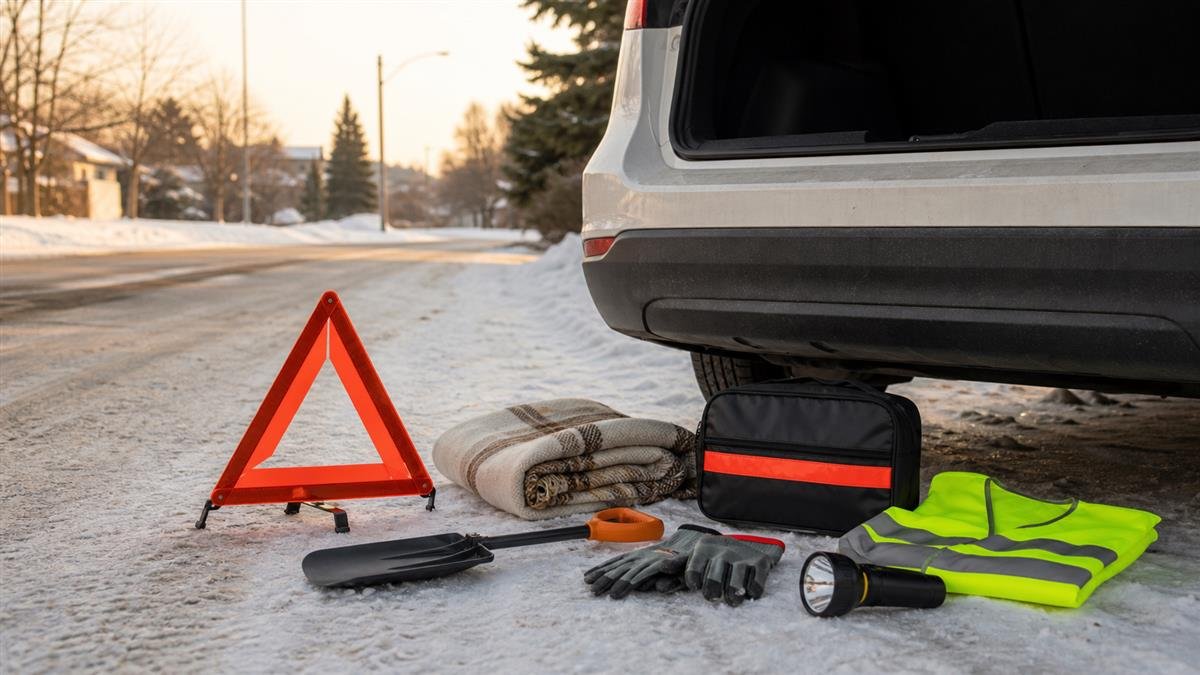
A roadside kit can collect visibility items, basic first aid, gloves, small tools, and simple roadside gear in one bag. Look at what is actually included instead of buying only by item count.
The better kits are organized enough that you can find what you need quickly. If the included items are weak, treat the kit as a starter bag and add your own gloves, light, blanket, and phone-power backup.
See current roadside emergency kits on Amazon.
9. Flashlight or headlamp
A flashlight or headlamp is useful in dark parking lots, winter commutes, roadside delays, and garage corners. If it is rechargeable, check it before winter. If it uses batteries, keep spares where they will stay dry.
A headlamp can be easier if you need both hands free, while a simple flashlight is easier to share with a passenger. Either way, store it where you can grab it without emptying the trunk.
10. Reflective vest or warning triangle
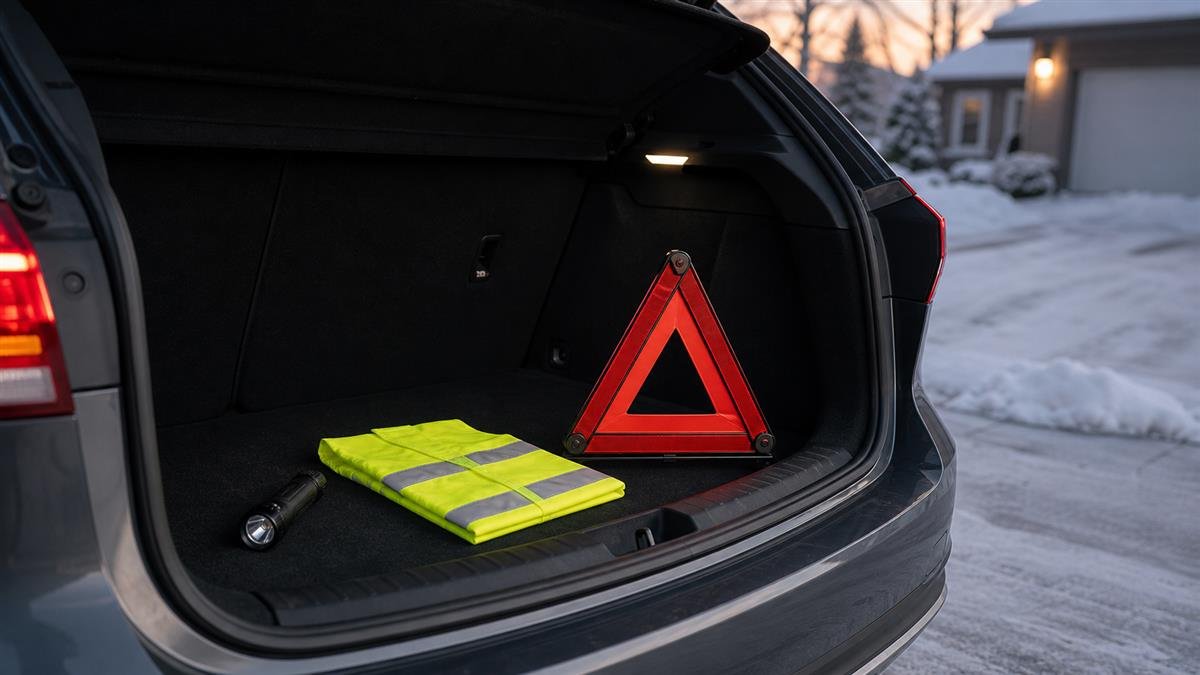
Reflective visibility items are useful if you need to step out near a road or make your vehicle easier to notice while waiting for help. They are simple, small, and better kept with your roadside kit than loose in the trunk.
For city drivers, this may feel unnecessary until a dark parking lot or shoulder stop makes visibility more important. For highway commuters, it deserves a more permanent place in the winter kit.
11. Warm gloves and hat
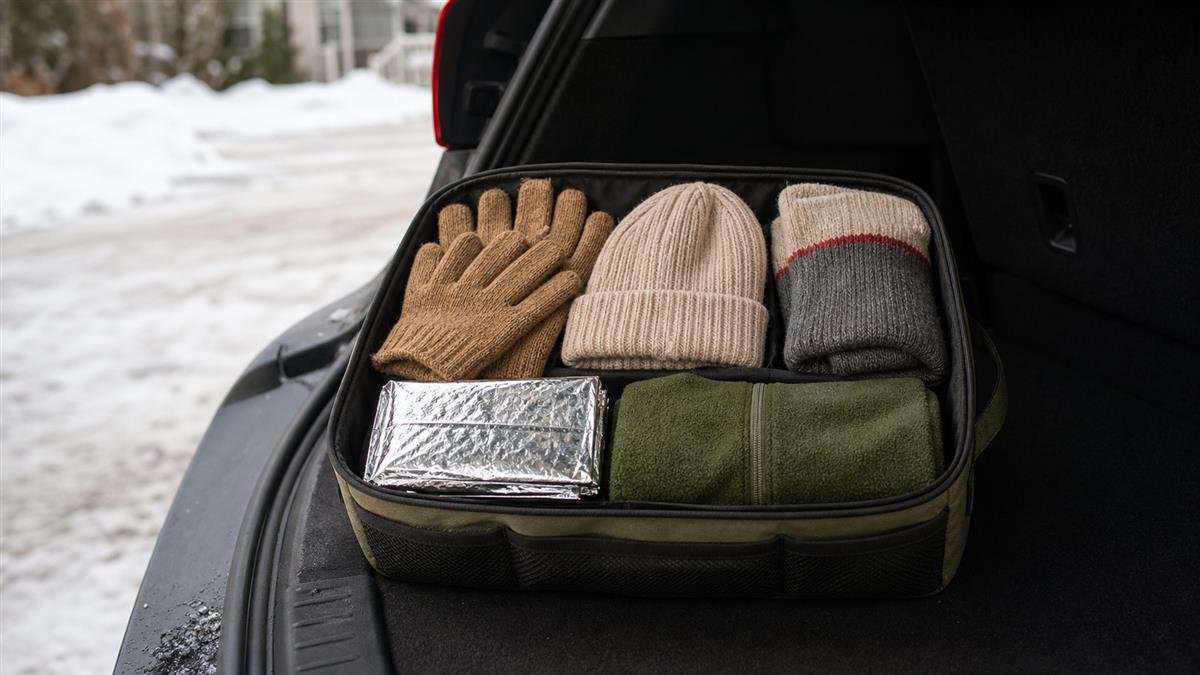
Even small winter car problems become uncomfortable quickly when your hands are cold. Keep a spare pair of gloves and a hat in the cabin or an easy-access bag.
Choose gloves that are warm enough for snow clearing but not so bulky that you cannot handle a scraper, cable, flashlight, or phone. A cheap spare pair is better than the perfect pair sitting at home.
12. Emergency blanket or compact warm blanket
A compact blanket can help during longer waits or when the car is off. Keep it dry and easy to reach, especially if you often drive with passengers or kids.
A foil emergency blanket takes almost no room, while a fleece or wool blanket is more comfortable but bulkier. In a family vehicle, the more comfortable option may be worth the space if it stays clean and dry.
13. Extra socks or warm layer
Wet socks, slushy boots, and cold hands are ordinary winter problems. A small extra layer or pair of socks can make a delay less miserable without taking much space.
This is especially useful if you clear snow often, park outside, drive kids to activities, or do longer winter trips. Keep soft items in a sealed pouch so they do not absorb trunk moisture.
14. Phone charging cable and power bank
Navigation, calls, photos, and roadside assistance all depend on phone battery. Keep a charging cable in the vehicle and consider a power bank for times when the car is off or the outlet is not available.
If the power bank stays in the vehicle, check it through the season. Cold can reduce battery performance, and a backup battery that has slowly drained is not much help during a delay.
15. Sturdy phone mount
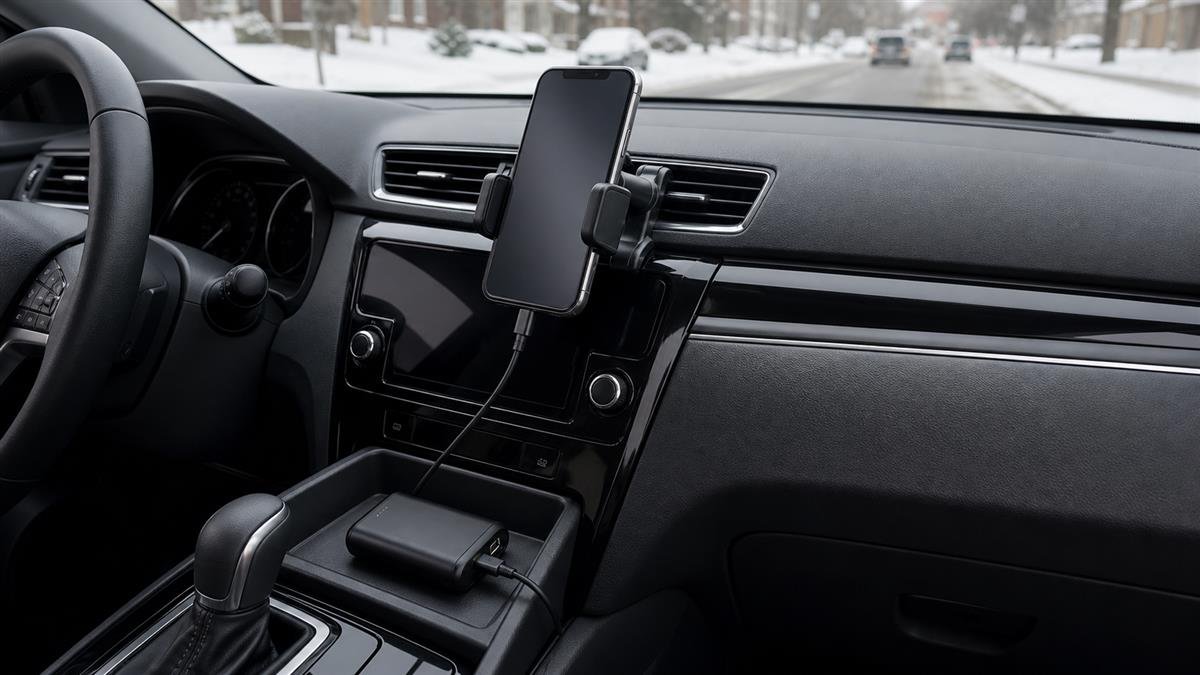
A sturdy phone mount can help with navigation on winter drives, especially when you do not want the phone sliding around the console. It should not block visibility, vents you rely on for defrosting, or vehicle controls.
For winter use, vent mounts can be convenient but may interfere with warm airflow. Dashboard and windshield mounts can be more visible, but they need a stable surface and must not block your view.
16. Winter-ready dash cam
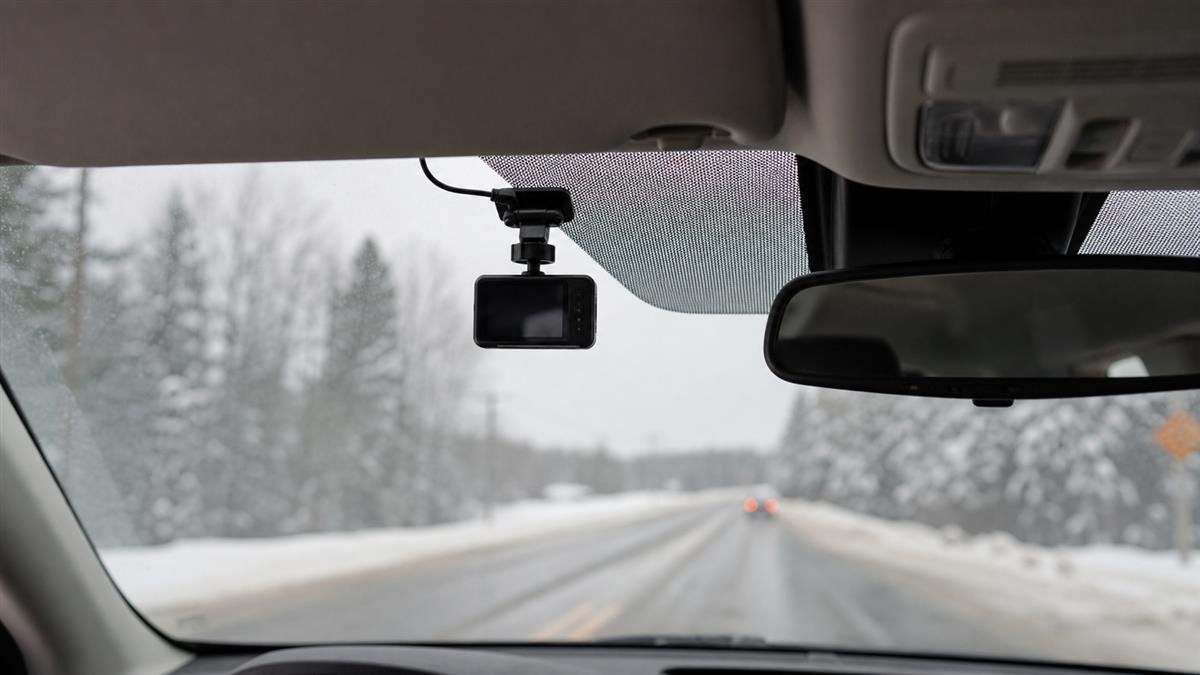
A dash cam can make sense for dark commutes, outdoor parking, low visibility, and crowded winter lots. If you are still learning the basics, start with our dash cam guide for Canadian drivers.
For winter buying decisions, compare our winter-friendly dash cam picks. If you are deciding whether rear coverage is worth the extra setup, see our guide to a front and rear dash cam setup.
For a car parked outside, look beyond resolution. Power design, memory-card reliability, parking mode, and cable routing matter more than a long spec sheet that does not match how you actually use the vehicle.
17. Paper towel or microfiber cloth
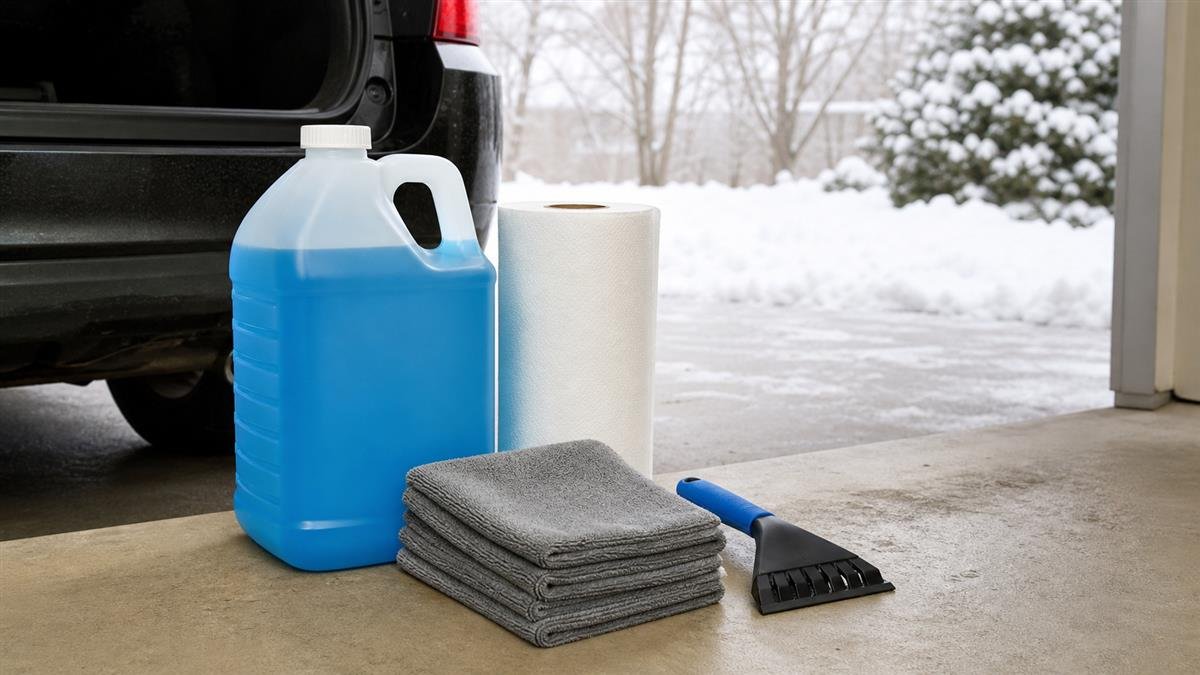
Condensation, road salt, dirty mirrors, and small spills all happen more often in winter. A microfiber cloth or paper towel roll is basic, but useful.
A microfiber cloth is better for interior glass and screens, while paper towel is useful for wet boots, small spills, and messy cargo. Keep at least one cleaning item where it will not get soaked.
18. Winter-rated washer fluid
Washer fluid should be rated for freezing conditions. Check the temperature rating on the bottle and keep a spare if you do longer winter drives.
Do not assume every blue bottle is suitable for your local winter. Drivers in milder coastal areas and drivers in colder Prairie conditions may need different temperature ratings.
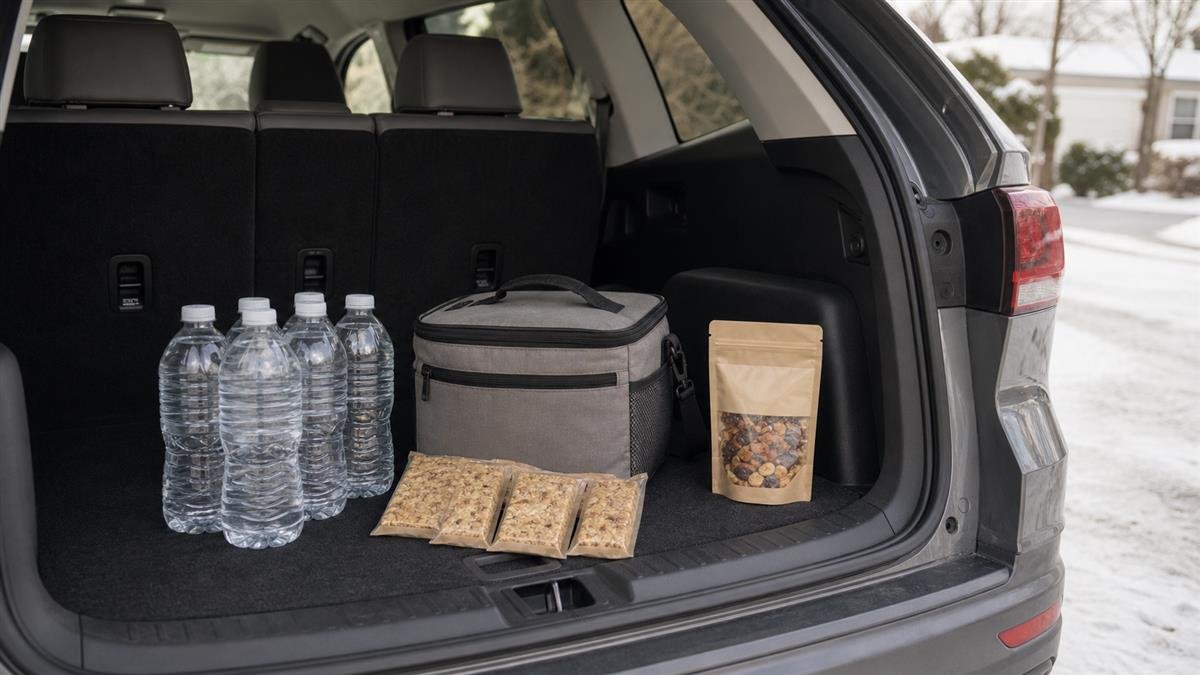
19. Snacks and water
Snacks and water are easy to overlook until a delay becomes longer than expected. Rotate them occasionally so they do not sit forgotten for the whole season.
Choose items that tolerate temperature swings and do not make a mess in the trunk. For family vehicles, add enough for passengers, not just the driver.
20. Trunk organizer or storage bag
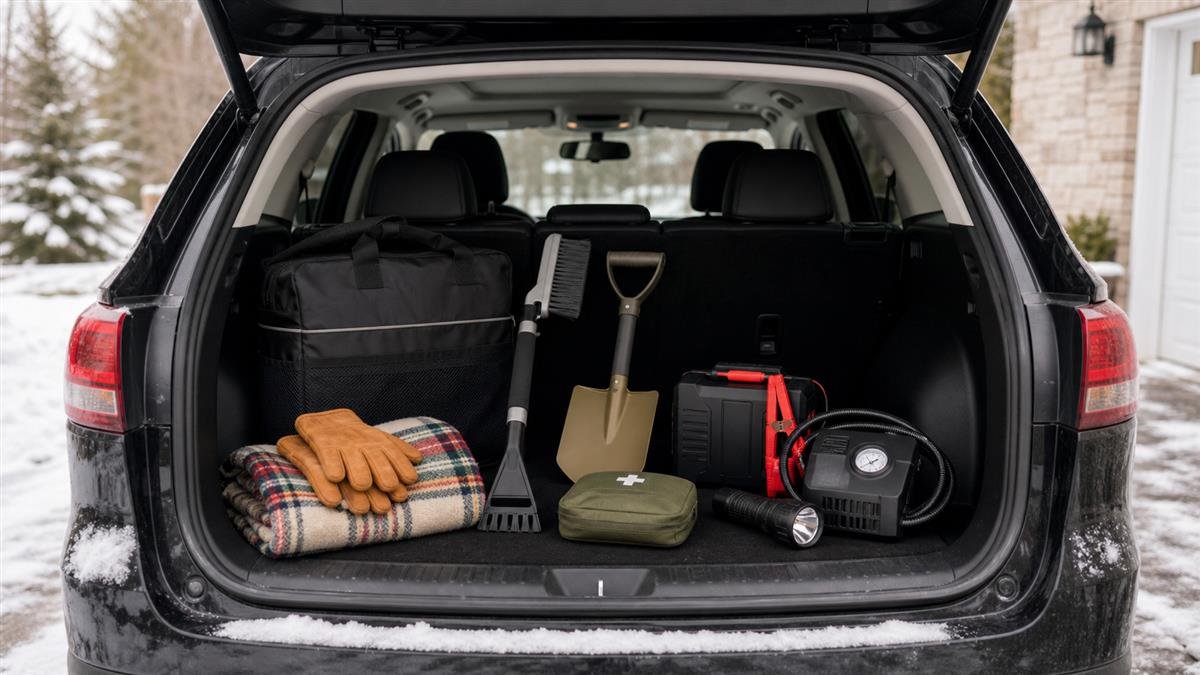
A trunk organizer keeps the scraper, gloves, inflator, blanket, cables, and small emergency items from turning into loose clutter. It also makes it easier to notice what is missing.
The best organizer is not necessarily the biggest one. It should leave room for groceries, sports bags, strollers, or luggage, otherwise it will eventually get removed from the vehicle.
If you are buying for someone else, see our guide to practical car gadget gifts.
What to keep in the cabin vs the trunk
| Item type | Better location | Why |
|---|---|---|
| Phone charger / power bank | Cabin | Easier to reach when you need directions or a call |
| Flashlight | Cabin or glovebox | Useful quickly in the dark |
| Gloves / hat | Cabin | Needed before stepping outside |
| Snow brush / scraper | Cabin or easy-access trunk | Should not be buried under other cargo |
| Shovel / traction aid | Trunk | Bigger items that are used outside the vehicle |
| Roadside kit | Trunk | Organized backup for roadside delays |
| Blanket | Cabin or trunk | Keep it dry and easy to reach |
Build your kit by driving situation
City commuter
Start with a snow brush, scraper, gloves, phone charging cable, flashlight, and basic roadside visibility items. If your commute includes outdoor parking, add a tire gauge and small inflator.
Apartment or condo driver
Prioritize compact items that do not take over your trunk: scraper, gloves, blanket, power bank, flashlight, and a small storage bag. If you do not have easy home charging, check battery-powered gear more often.
Highway commuter
Consider a more complete setup with roadside visibility, warmth, phone power, tire pressure help, a jump starter or booster cables, and a compact shovel. Long waits are more realistic outside dense city areas.
Family vehicle
Add extra warmth, water, snacks, tissues, and charging cables. The best family kit is organized enough that someone can find the right item quickly.
Older vehicle parked outside
Pay extra attention to battery support, tire pressure, lights, washer fluid, and routine maintenance. Accessories help, but they are not a substitute for a healthy vehicle.
What to buy first if you do not want to overpack
- Snow brush and ice scraper: daily winter visibility comes first.
- Jump starter or booster cables: useful if cold starts are a real concern.
- Tire pressure help: a tire gauge and inflator cover common seasonal pressure drops.
- Roadside visibility: flashlight, reflective vest, or warning triangle.
- Warmth and phone power: gloves, blanket, charging cable, and power bank.
- Dash cam if recording matters: choose one for your actual driving and parking situation, not just resolution.
For more driving-related buying guides, browse our car tech guides.
What to be careful with
- Tow straps are not for everyone: improper use can be dangerous and vehicle-specific.
- Tire chains may not be suitable or allowed everywhere: check local rules and vehicle guidance before buying.
- Candles or heaters require caution: do not use anything that creates fire, fumes, or ventilation risks without understanding the instructions.
- Gadgets do not replace winter tires or maintenance: tires, battery health, lights, and fluids still matter most.
- Bulky gear gets removed: if it annoys you every grocery trip, it may not stay in the vehicle.
- Temperature ratings matter: check operating and storage guidance for batteries, electronics, fluids, and plastic parts.
FAQ
What should I keep in my car in winter in Canada?
Start with a snow brush and ice scraper, warm gloves, phone charging backup, flashlight, blanket, tire pressure gauge, and roadside visibility items. Drivers who park outside or take longer routes may also want a jump starter, inflator, compact shovel, traction aid, snacks, water, and a trunk organizer.
Are portable jump starters worth it in winter?
They can be worth it if your vehicle parks outside, your battery is older, or you drive in places where help may take time. A jump starter still needs to be charged and used according to its instructions.
Can cold weather affect tire pressure?
Yes. Tire pressure can drop as temperatures fall, which is why a tire gauge and portable inflator can be useful winter tools. They help with top-ups, not tire damage or unsafe tires.
Do I need both booster cables and a jump starter?
Not always. A jump starter is more independent, while booster cables require another vehicle. Some drivers keep both, but if you want the simplest kit, choose the option you will actually maintain and understand how to use.
Do I need a dash cam for winter driving?
No driver needs one for every situation, but a dash cam can be useful for dark commutes, parking lots, winter road incidents, and outdoor parking. For a calmer starting point, compare dash cam power, storage, and installation before buying.
What should go in a winter roadside emergency kit?
A practical winter roadside kit usually includes visibility items, a flashlight, gloves, basic first-aid items, blanket, phone charging backup, scraper, and items suited to your route. Highway and rural drivers may need a more complete kit than someone doing short city trips.
Final thoughts
A good winter car kit does not need to be huge. It should cover the situations Canadian drivers actually face: clearing snow, dealing with cold starts, checking tire pressure, staying visible, keeping warm, charging a phone, and finding the right item quickly when something goes wrong.