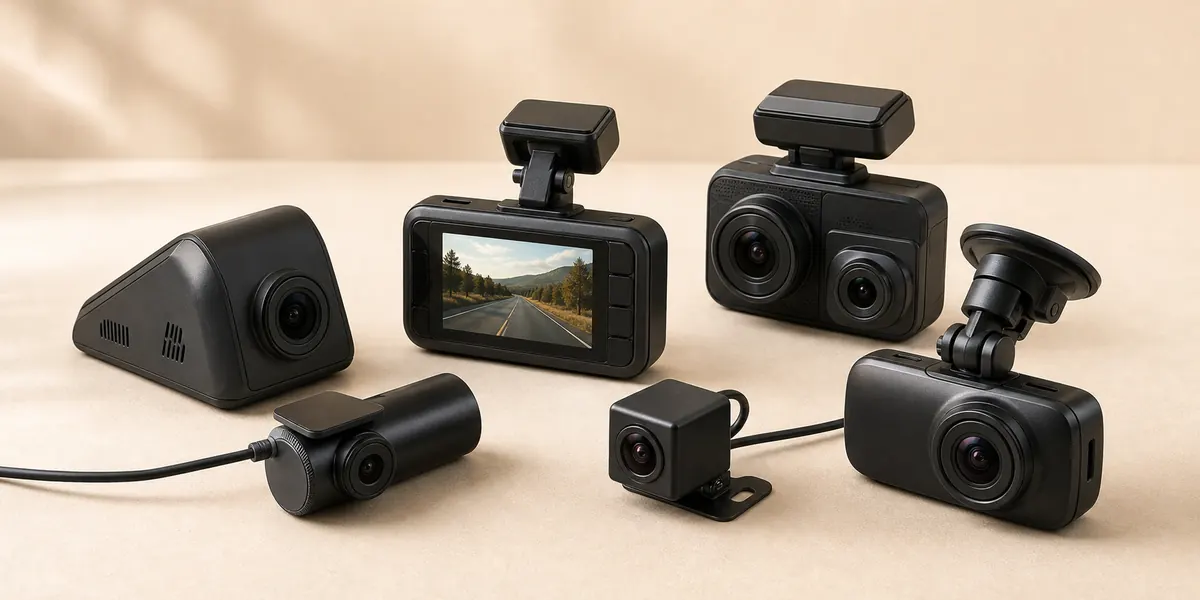
A dash cam is easy to overbuy. A big resolution number on the box does not fix weak parking power, a poor memory card, awkward rear-camera wiring, or a mount that gets ignored after the first week.
Use this page to find the dash cam question that matches your situation, whether you are comparing winter-friendly models, fixing cold-weather shutdowns, deciding on hardwiring, or choosing between front-only and front-and-rear coverage.
Start with your situation
My car sits outside
Prioritize a supercapacitor design, published operating temperatures, a suitable memory card, and realistic parking-mode power.
I want a simple setup
A front-only camera powered from the vehicle outlet may be enough if you do not need recording while parked.
I park on the street
Front and rear coverage plus a properly configured parking setup may be worth the added wiring and cost.
I am buying a gift
Choose something compact with clear controls and confirm the recipient is comfortable with installation.
The six decisions that matter
Supercapacitor or internal battery?
For most Canadian drivers who leave a car outside, a supercapacitor model is the more sensible starting point. A supercapacitor is used to finish saving a recording and shut down safely; it is not intended to run the camera for hours after the engine is off.
Small internal batteries can be useful for short shutdown tasks, but batteries are more sensitive to temperature extremes and age. Read our supercapacitor vs battery comparison before treating either label as a complete answer.
Driving only or parking mode?
A plug-in camera can start with the car and cover normal driving with very little effort. Parking mode is different: it needs a power source after the ignition is off and a way to protect the vehicle battery.
If overnight or workday parking coverage matters, check whether the camera requires a hardwire kit, an OBD power cable, or a separate dash cam battery. Then decide how much parked recording you actually need.
Front-only or front and rear?
Front and rear systems provide more context after a rear impact or parking incident. They also cost more, use more storage, and require a cable to be routed to the rear window. Not everyone needs that trade-off.
Memory card reliability
Dash cams constantly overwrite video, which is demanding work for a microSD card. Use a capacity and card type approved by the camera manufacturer, format it as directed, and check recordings periodically. A camera that powers on is not proof that every file is being saved correctly.
Night recording
Canadian winter commutes often happen in the dark. Sensor quality, exposure control, windshield reflections, and a clean windshield matter alongside resolution. A 4K label alone does not guarantee readable plates in every moving night scene.
Installation you can live with
A discreet cable and an accessible memory card make a camera easier to keep using. Before buying a rear camera, picture the cable route through your particular vehicle. Before buying for parking mode, decide whether you are comfortable paying for installation.
Our practical starting point
For a car parked outside, start with a reputable supercapacitor camera and an endurance-rated card. Choose front and rear only when the extra coverage is worth the wiring. Add hardwiring only when parking mode is a real need, not because the feature list makes it sound essential.
Choose the guide that answers your question
If you are building a broader winter setup for the vehicle, our winter car accessories Canada guide covers practical gear beyond the camera itself.
Before you buy
- Confirm the manufacturer’s published operating temperature.
- Check whether a memory card is included and what capacities are supported.
- Confirm what extra hardware parking mode requires.
- Look at the rear cable length and connector style for a two-channel system.
- Make sure the mount will not block your view; follow local rules and product instructions.
- Budget for professional installation if you do not want to route or hardwire cables.
Important: A dash cam can provide useful footage, but it cannot guarantee that a plate will be readable or that a claim will have a particular outcome. Keep the windshield area legal and unobstructed, protect other people’s privacy, and review local requirements.